
Russian Deputy Foreign Minister Sergei Ryabkov on Friday pushed back against the idea of NATO-style security guarantees for Ukraine and said that any form of “quasi-membership” for Kyiv in the Western military alliance was totally unacceptable to Moscow, Russian state media reported.
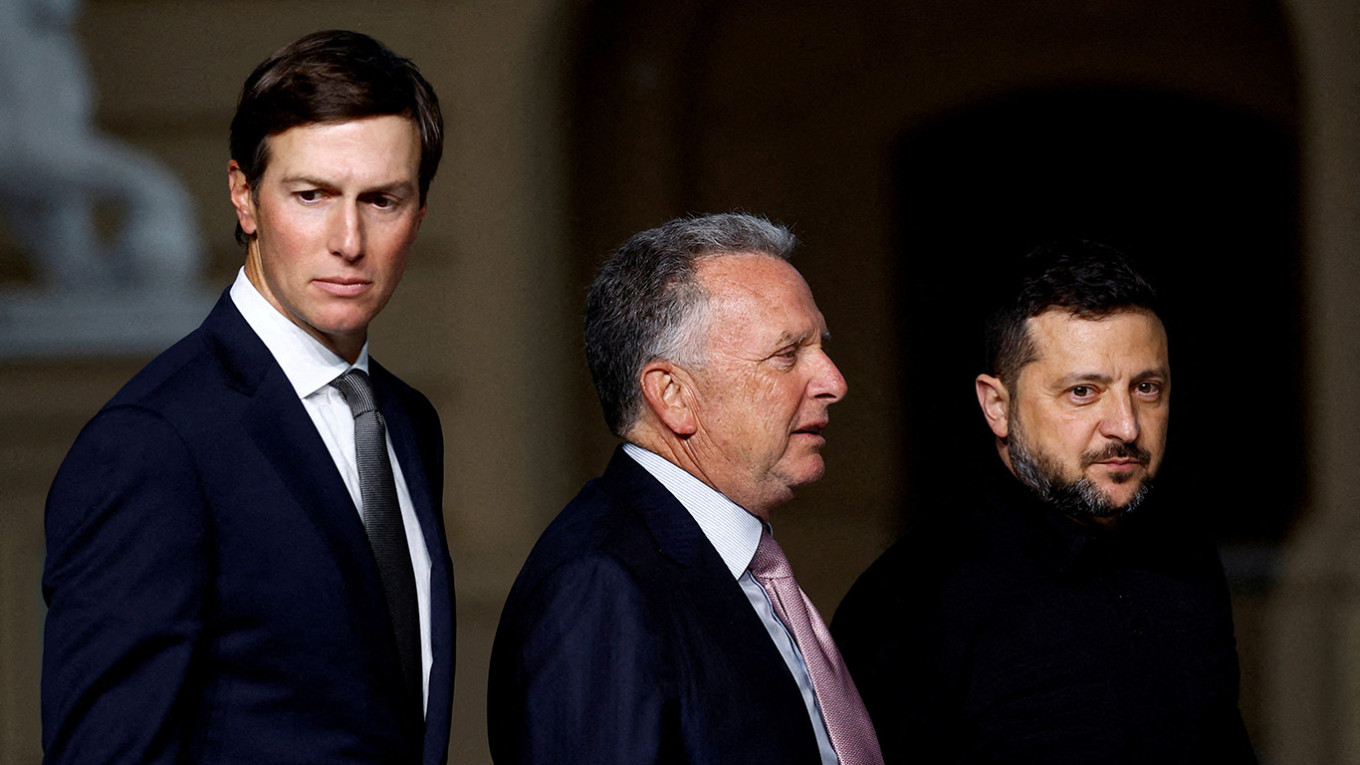
Ryabkov made the comments a day after French President Emmanuel Macron said after a Berlin summit that the question of Ukraine's NATO membership should be reopened. At the same event, U.S. peace negotiator Jared Kushner said that he and fellow negotiator Steve Witkoff had “gotten the Russians comfortable with the concept that any security guarantee for Ukraine would be based on Article 5.”
“I would like to say that even the notion of a formula for Ukraine’s quasi-membership of NATO, and the search for some sort of — in inverted commas — ‘creative solution’ in this area, is an option that is unacceptable to us. We discuss security guarantees first and foremost in terms of ensuring the security of our own country,” Ryabkov was cited as saying by the Interfax news agency, after being asked whether NATO Article 5-style guarantees for Ukraine would be acceptable to Russia.
“As far as Ukraine is concerned, let them recognize the irrevocable nature of our demand that this state must not join NATO. When that happens, I think the issue of security guarantees can be discussed in one way or another,” Ryabkov added.
Ryabkov also confirmed that a potential visit to Moscow by representatives from Britain, Germany and France was being worked on.
President Vladimir Putin said Thursday that Russia had proposed that European envoys come to Russia to clarify their position on Ukraine peace negotiations before the format of further talks is decided.
Separately, Foreign Ministry spokeswoman Maria Zakharova said that including EU foreign policy chief Kaja Kallas in any potential future negotiations on Ukraine with Moscow would lead to the collapse of talks.
Zakharova told a press briefing in Moscow that Kallas was totally unsuitable to take part in such talks and listed a series of statements from Kallas which she said showed the EU official was anti-Russian.
Kallas said earlier this month that Russia had no say over who represented the bloc in the Ukraine-Russia peace talks, adding she knew Moscow did not want her there but that she spoke on behalf of all 27 member states rather than in a personal capacity.
She has said Russia needs to agree to a ceasefire in Ukraine and make concessions before any serious peace talks can begin and has been skeptical about Russia's desire to discuss Europe's own security architecture as part of negotiations.
Europe has so far not been involved in U.S.-mediated peace talks between Russia and Ukraine, but has agreed it will be represented by five major military powers — non-member Britain plus France, Germany, Italy and Poland — and EU institutions, if and when it is included.
A Message from The Moscow Times:
Dear readers,
We are facing unprecedented challenges. Russia's Prosecutor General's Office has designated The Moscow Times as an "undesirable" organization, criminalizing our work and putting our staff at risk of prosecution. This follows our earlier unjust labeling as a "foreign agent."
These actions are direct attempts to silence independent journalism in Russia. The authorities claim our work "discredits the decisions of the Russian leadership." We see things differently: we strive to provide accurate, unbiased reporting on Russia.
We, the journalists of The Moscow Times, refuse to be silenced. But to continue our work, we need your help.
Your support, no matter how small, makes a world of difference. If you can, please support us monthly starting from just $2. It's quick to set up, and every contribution makes a significant impact.
By supporting The Moscow Times, you're defending open, independent journalism in the face of repression. Thank you for standing with us.

Remind me later.