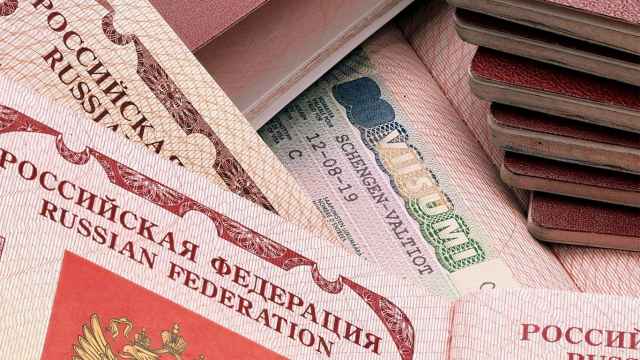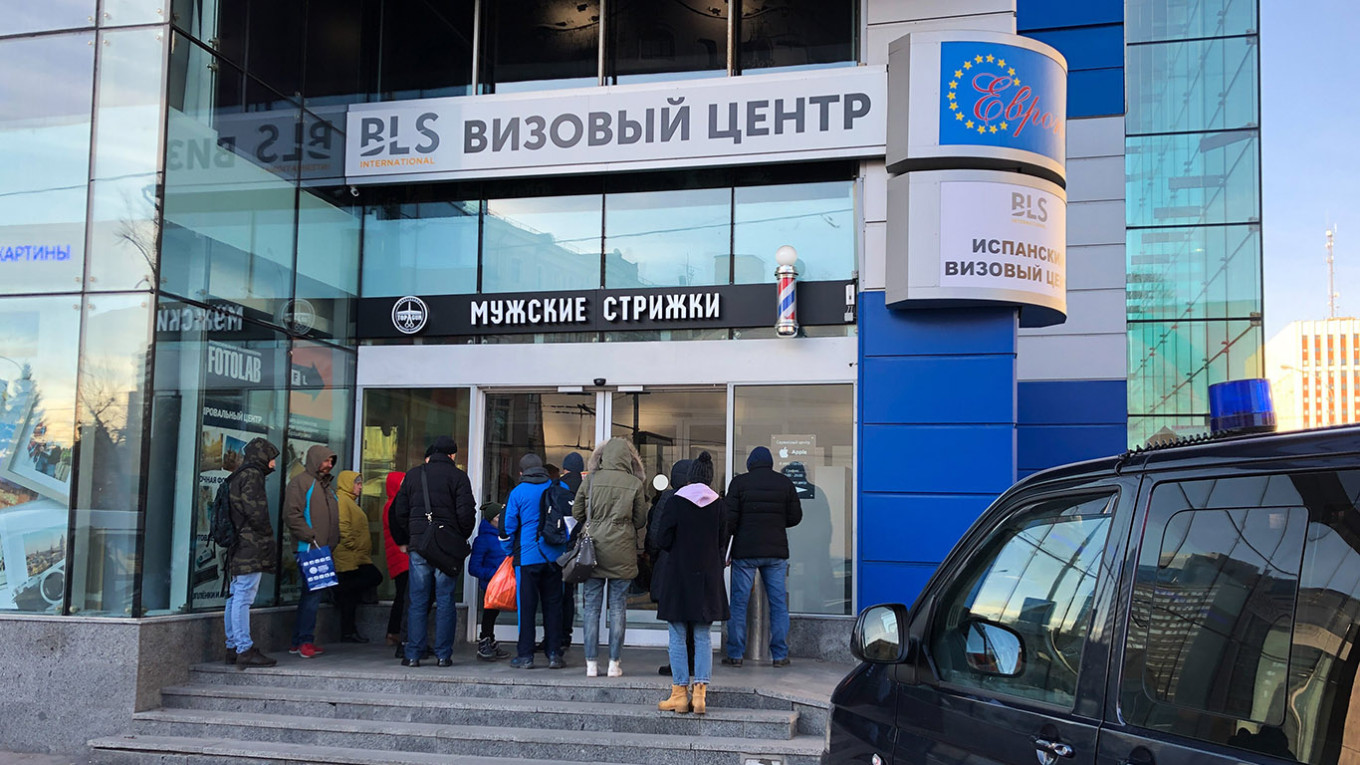
From the very first day of the full-scale invasion of Ukraine, the European Union has been consistently and gradually tightening visa restrictions for Russian citizens. The European Commission has revoked the agreement on the simplified issuance of Schengen visas for Russian tourists and completely ceased granting multiple-entry visas, while almost half of the member states have introduced bans on processing visa applications from Russians. Some have even closed their borders to them entirely.
The result: 680,000 visas issued by the end of 2025, compared with 4 million in pre-pandemic 2019.
Throughout these four years, this debate has been conducted predominantly in moral and political terms, arguing that it is unethical to allow Russians to have fun in the West while Ukrainians continue to suffer; that visiting Europe is a privilege, not a human right. and that Russians should be asked at border control desks who Crimea belongs to. Nor have counterarguments subsided: that such measures would merely help Putin erect a new Iron Curtain, while doing little to spark the protests within Russia that some EU politicians hoped for.
It might seem that more than enough has already been said and written on this subject (including by the author of this article). Yet on Oct. 11, the visa debate reignited with unprecedented intensity and a new set of arguments. Increasingly, the discussion is no longer about restrictions, but a total ban on visas. The rationale is no longer simply solidarity with Ukrainians, but the threat to European security posed by the Kremlin’s hybrid warfare, an incomparably more serious matter than debates over the ethics of wartime tourism.
This shift in the narrative is, first and foremost, a consequence of the failed drone attack at Leipzig Airport. In its wake, even Germany — which had previously maintained a relatively moderate stance on visa requirements for Russians — proposed that Russians be issued exclusively with Limited Territorial Validity (LTV) visas, which restrict travel to one or a handful of countries within the Schengen Area.
However, even this proposal seems relatively moderate compared with the positions taken by countries such as Poland, Finland and the Baltic states, which are pressing for an EU-wide ban on tourist visas for Russians. “We fear that Russia is trying to carry out sabotage activities on European territory. Why, in heaven's name, are we letting them into European territory as tourists, where they can move around freely?” asked Finnish Prime Minister Petteri Orpo. Migration Commissioner Magnus Brunner echoes these concerns, arguing that “you never know who these tourists actually are,” and calling on EU countries to “do a better job” of issuing fewer visas to Russians.
The European Commission is expected to present proposals to update its visa policy in January 2027. Let us assume that new restrictions are indeed agreed upon — and that the most radical scenario is adopted, involving not merely LTV visas but a complete ban on tourist travel for Russians. To what extent would such a ban protect Europe from acts of the Kremlin’s hybrid warfare?
Let us return to the pivotal incident in Leipzig. Had a hypothetical ban already been in force in the summer of 2026, when Russia’s foreign military intelligence agency (the GRU) was planning and carrying out the operation, it would almost certainly have made little difference. Not least because both suspected perpetrators of the sabotage, in addition to their Russian citizenship, also held other nationalities: Latvian and Belarusian.
While the Latvian passport allowed the operation’s coordinator to enter the EU unhindered, a Belarusian national, Andrei K., needed a Schengen visa, which he obtained from the Italian Embassy in Minsk in April 2026.
According to a joint investigation by Der Spiegel and The Insider, Andrei had already come under suspicion from Polish authorities in 2024, becoming a suspect in a Łódź arson case that police were treating as a likely act of sabotage with Russian links. To make matters even worse, Andrei also appeared in the criminal databases of Lithuania and Finland, where he had previously been convicted of various criminal offenses, including theft.
According to the European Visa Code, when assessing a Schengen visa application, an embassy must pay particular attention to whether the applicant poses a threat to the security of the member states. The fact that Andrei was granted a visa suggests either negligence on the part of the Italian embassy or a failure by Polish, Finnish and Lithuanian law enforcement agencies to share information about his criminal record with their European counterparts — pointing to a potentially systemic problem with the exchange of law enforcement information within the EU.
Had the Italian authorities known about the suspicious Belarusian in advance, the Schengen visa system might have helped prevent the sabotage. When applying for a visa, Andrei was required to provide flight and hotel bookings, which could have made it easier to track his movements, potentially leading German police to both his accomplices and the location where the explosive-laden drone used in the attack was being stored.
However, in the Leipzig case, even that may not have been necessary. According to sources cited by Welt am Sonntag, German authorities already knew that Andrei’s accomplice — the one holding a Latvian passport — had links to the GRU when he arrived at Berlin airport, just days before the incident. Why the German authorities did not immediately place him under surveillance remains unknown.
In any case, Russia rarely offers the EU such gifts: saboteurs who need a visa to enter Europe or who are already listed in European criminal databases. According to a recent study by the International Centre for Counter-Terrorism, the Kremlin has organized 151 acts of sabotage in Europe over the past four years, involving 172 perpetrators.
Around half of these individuals were already living in the countries where they committed their offenses, holding either residence permits or citizenship that allowed them to move freely within the Schengen Area. The other half consisted mainly of citizens of countries in central, southern and eastern Europe, particularly Serbia and post-Soviet republics such as Moldova and Georgia, whose citizens can travel to the EU without a visa.
Possession of a visa-free passport is a key criterion for the GRU when selecting perpetrators, as it significantly facilitates the organization of sabotage operations. Involving a Russian citizen traveling on a Schengen tourist visa would jeopardize the mission, given the risk of the visa being refused or delayed, issued for a shorter period than expected, or the applicant’s links to Russian intelligence services being uncovered during the vetting process.
This is precisely why the GRU avoids such practices — and why hopes that tightening visa restrictions on Russian tourists will protect Europe from future acts of sabotage are unfounded. On the contrary, refusing to issue Schengen visas to Russians, or imposing further restrictions on them, would mean the European Union giving up a fishing rod that might, on rare occasions, catch a suspicious applicant and help prevent a sabotage operation — as might have happened in Leipzig.
Not to mention that the Kremlin’s hybrid warfare in Europe is a complex system in which acts of sabotage account for only a small part of its activities alongside disinformation, GPS jamming, cyber-attacks and provocations involving the smuggling of illegal migrants across the Polish-Belarusian border. Against this backdrop, devoting time and resources to debating, agreeing on and implementing further restrictions on Russian tourists — whose access to the EU is already tightly controlled — is tantamount to fighting an imaginary enemy while genuine threats to the security of Europeans loom large.
It is not difficult to speculate about what motivates the most vocal proponents of visa reform. In Finland, for example, parliamentary elections are scheduled for the spring and the topic of restrictions on Russian citizens enjoys strong public support. Germany, meanwhile, may be seeking to deflect attention from the apparent failures of its own security services, which nearly resulted in a tragedy in Leipzig.
It is far easier to shift the blame onto Russian tourists and make emotive, populist statements than to acknowledge one’s own security mistakes and work to rectify them. And it is certainly far easier than cutting off funding for Putin’s regime by continuing to spend billions on Russian natural resources in the fifth year of the war, or, at long last, taking action against Russians who organize and finance assassinations of EU residents from the very heart of Europe. Holding diplomatic passports, they do not even need Schengen visas to do so.
A Message from The Moscow Times:
Dear readers,
We are facing unprecedented challenges. Russia's Prosecutor General's Office has designated The Moscow Times as an "undesirable" organization, criminalizing our work and putting our staff at risk of prosecution. This follows our earlier unjust labeling as a "foreign agent."
These actions are direct attempts to silence independent journalism in Russia. The authorities claim our work "discredits the decisions of the Russian leadership." We see things differently: we strive to provide accurate, unbiased reporting on Russia.
We, the journalists of The Moscow Times, refuse to be silenced. But to continue our work, we need your help.
Your support, no matter how small, makes a world of difference. If you can, please support us monthly starting from just $2. It's quick to set up, and every contribution makes a significant impact.
By supporting The Moscow Times, you're defending open, independent journalism in the face of repression. Thank you for standing with us.

Remind me later.