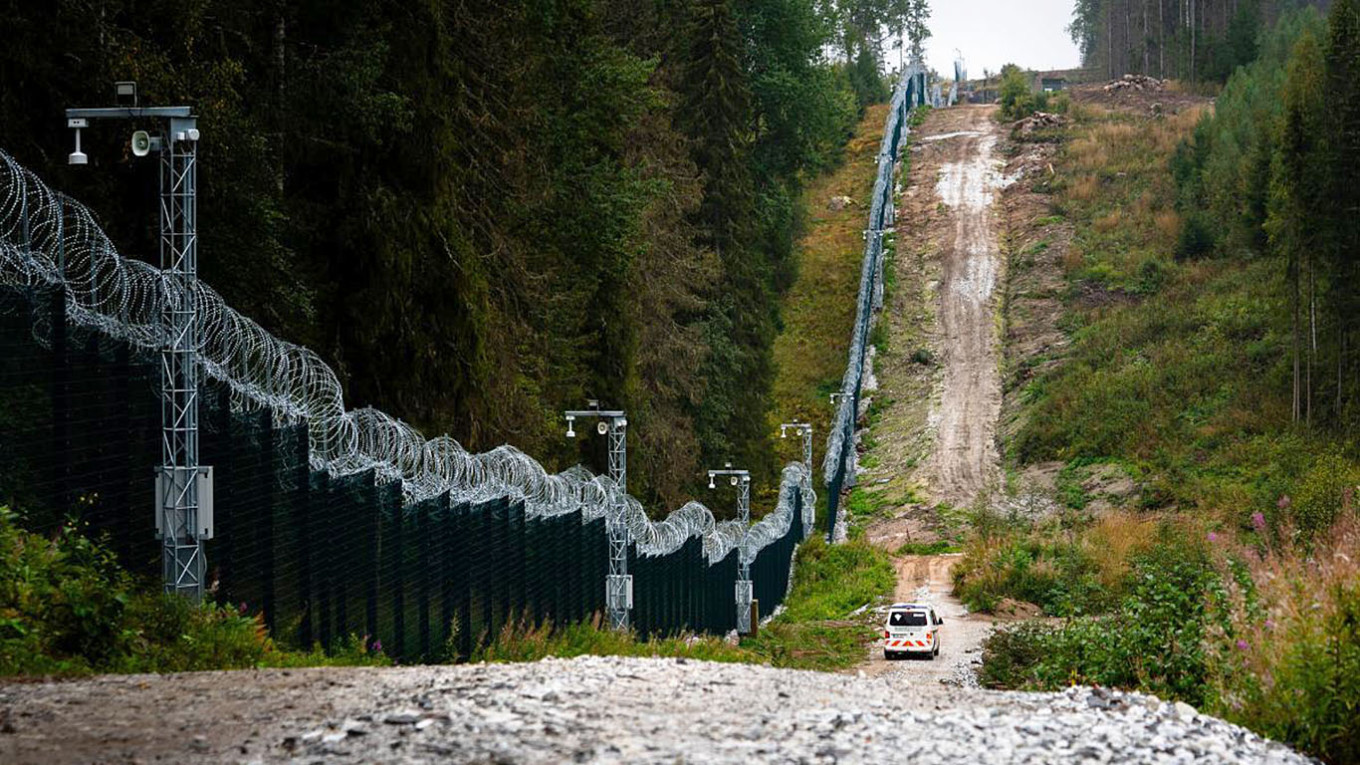
Finland has completed construction on a 200-kilometer (124-mile) fence along its eastern border with Russia, three years after the project began, the Finnish public broadcaster Yle reported Monday.
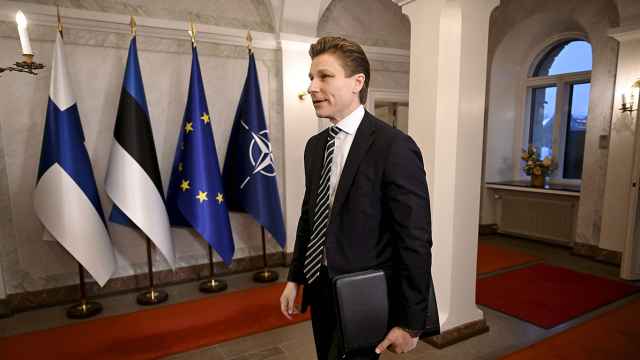
Finnish Interior Minister Mari Rantanen presented the completed fence near a shuttered border crossing, saying the barrier addresses heightened security risks following Russia’s invasion of Ukraine and could be extended further.
“What we particularly need is EU funding for eastern member states so that projects like this can be financed,” Rantanen said.
The new fence cost 356 million euros ($413 million), with an estimated 2-3 million euros for annual maintenance, according to Finnish border authorities.
The barbed wire fence spans Finland’s southeastern border with Russia and parts of its eastern flank. It features patrol roads, loudspeakers, night lighting and surveillance cameras.
Russia and Finland share a 1,340-kilometer (833-mile) border, the longest of any EU or NATO member.
Similar fences have been erected in Estonia, Latvia, Lithuania and Poland on their borders with Belarus to stem migrants from crossing.
Finland shut its eastern border crossings with Russia indefinitely in December 2023 following an influx of asylum seekers. Helsinki claimed the influx was a so-called “hybrid attack” in retaliation for Finland joining NATO in April 2023.
The Kremlin has rejected those accusations.
Over the summer, Russia closed five railway border checkpoints with Finland without disclosing the reasons or when they might reopen.
The Finnish government last week proposed an extension of its Border Security Act until Dec. 31, 2028 — a temporary one-year law that allows border guards to turn away asylum seekers under certain circumstances.
AFP contributed reporting.
A Message from The Moscow Times:
Dear readers,
We are facing unprecedented challenges. Russia's Prosecutor General's Office has designated The Moscow Times as an "undesirable" organization, criminalizing our work and putting our staff at risk of prosecution. This follows our earlier unjust labeling as a "foreign agent."
These actions are direct attempts to silence independent journalism in Russia. The authorities claim our work "discredits the decisions of the Russian leadership." We see things differently: we strive to provide accurate, unbiased reporting on Russia.
We, the journalists of The Moscow Times, refuse to be silenced. But to continue our work, we need your help.
Your support, no matter how small, makes a world of difference. If you can, please support us monthly starting from just $2. It's quick to set up, and every contribution makes a significant impact.
By supporting The Moscow Times, you're defending open, independent journalism in the face of repression. Thank you for standing with us.

Remind me later.